Get these in order before a buyer calls
- Who qualifies the contractor license, and whether they will stay after the sale
- Signed contracts and deposits, with the permit status of each job
- Barges, cranes, pile drivers and boats, with titles and recent repairs
- Three years of jobs split between new builds, repairs and storm work
- Warranty claims and any open disputes with customers or neighbors
What makes this work hard to copy
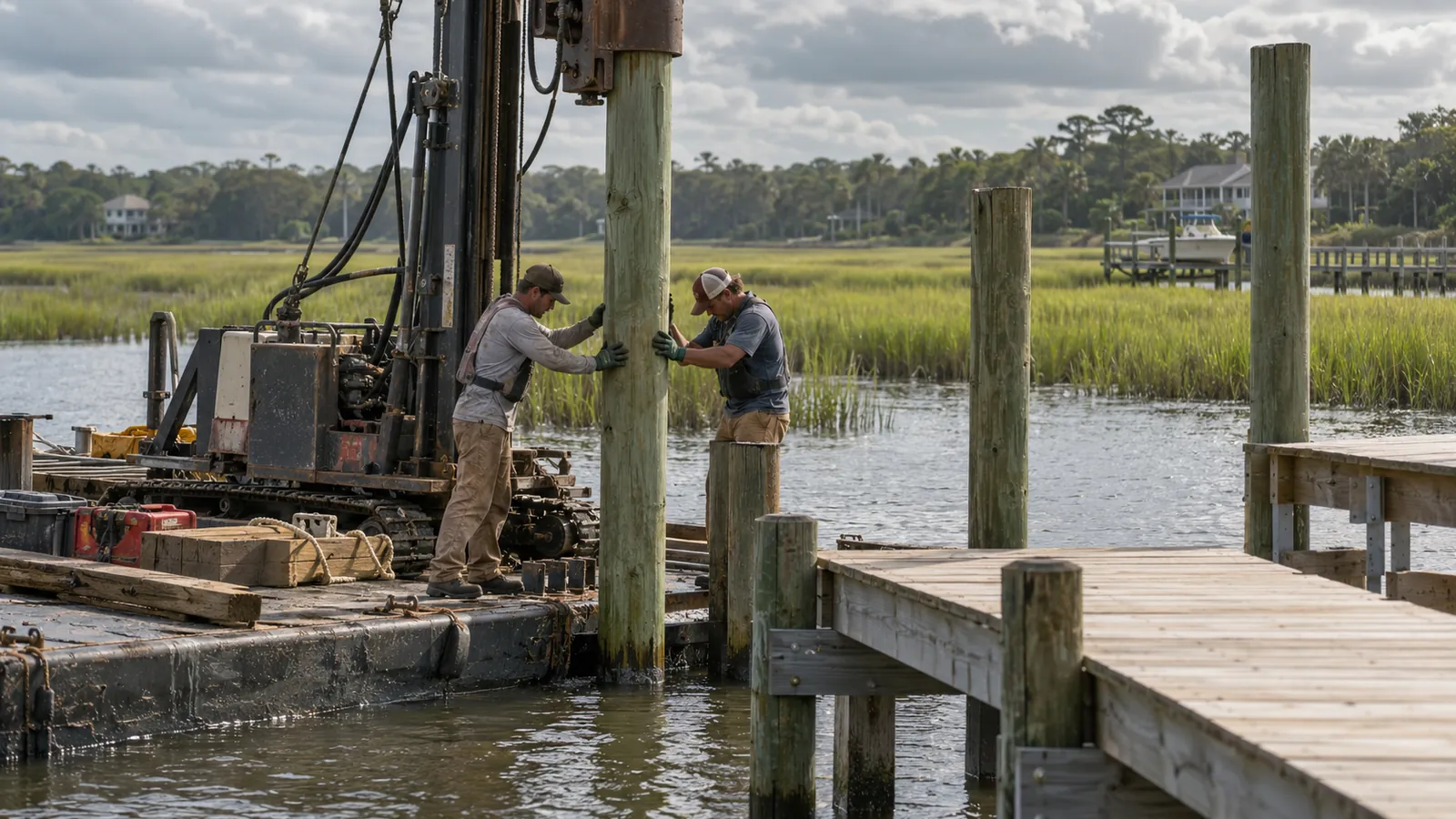
Building a dock or a seawall means working in the water, around tides, with heavy gear and a permit file that can take months. Most new entrants give up on the permit side long before they master the building side.
A company that already knows how to get jobs approved, has crews who can drive piles from a barge and has a backlog of signed work is worth more than its equipment list. Your job in a sale is to show all three on paper.
The license and the person behind it
Florida contractor licenses are held by a person who qualifies the company. If that person is you, the buyer needs a plan for who qualifies the business after you leave, whether that's a new hire, a partner or you during a transition.
This is one of the first questions a serious buyer asks. Talk to your attorney early about how the qualifier change works and what happens to jobs already underway under your name.
Permits in hand versus permits pending
Waterfront work usually needs approvals at more than one level, local, state and often federal. Buyers want to know which jobs are fully permitted and ready to build, and which are still waiting.
A backlog of permitted jobs with deposits paid is close to cash. A backlog of jobs still in review is a promise. Lay out each job with its status and expected start, and be honest about how long approvals have been taking lately.
Hurricane years and the backlog question
After a storm season that damages docks and walls, phones ring for a year or more. That surge can make one year look far better than the next. Buyers will average it out or treat part of it as one time.
The steadier your mix of new builds, lifts, repairs and maintenance work, the less a buyer worries about storm swings. If you have repeat customers like marinas, homeowner associations or property managers, list them.
Barges, cranes and boats on the asset list
Marine equipment is expensive and buyers inspect it closely. Keep service records for cranes, barges, pile drivers and work boats. Boats are taxed when the buyer titles and registers them, which affects how the price is split.
See sales tax on the assets you sell for how that allocation works. Note where the equipment is kept, too. A buyer who has to find new waterfront staging space adds that cost to the deal.
Insurance, crews and safety records
Marine work carries its own insurance needs, and buyers ask about claims history and premiums. A clean safety record and crews who have worked together for years both lower the risk a buyer sees.
If you also run pool or outdoor service work, look at our page on pool service companies. For the whole sale from start to finish, read selling a Jacksonville company.
Curious what your marine company could bring? Start with the confidential form or call (904) 555-0129.